Colorado ·
Arkansas River Fly Fishing Report - January 1/4/2026
ARKANSAS RIVER FLY FISHING REPORT
Colorado — Winter Conditions
Report Date: January 4, 2026 | Next Update: January 11, 2026
Current River Conditions
Mild winter pattern — minimal shelf ice and consistent fishing. Water clarity is good in most freestone reaches; the tailwater below Pueblo remains the most consistently fishable section day-to-day.
Flows & Ice
Typical winter releases and lower freestone flows — many stretches report little to no shelf ice. Check local USGS and Corps updates if you plan a float.
Water Temperature
Current: ~44–50°F (6–10°C)
Trend: Slight warming during daytime highs; cold nights
Current: ~44–50°F (6–10°C)
Trend: Slight warming during daytime highs; cold nights
Weather
Recent mild spells with daytime highs in the 40s–50s°F. Expect colder nights and possible wind. Dress in layers and keep an eye on forecasts.
Best Sections Right Now
- Pueblo tailwater: reliable technical nymphing and small dries when midges show.
- Lower freestone (Salida → Cañon City): good winter action where ice is absent.
- Pueblo tailwater: reliable technical nymphing and small dries when midges show.
- Lower freestone (Salida → Cañon City): good winter action where ice is absent.
Insect / Feeding Snapshot (Jan 4, 2026)
| Insect | Size | Activity | Where/When |
|---|---|---|---|
| Midges (adult & pupa) | #18–24 | High (primary winter food) | Tailwater & slow tailouts; steady throughout the day |
| Baetis / PMD residuals | #18–22 | Light–Moderate | Sunny mid-mornings; indicator fish in riffles |
| Caddis (larvae / some emergers) | #16–20 | Light | Evening/near weedlines and slower pockets |
| Stonefly nymphs / big rubber-legs | #6–12 | Present (subsurface) | Deeper runs & tails — good as point flies on heavy rigs |
| Small terrestrials (rare) | #10–16 | Occasional | Banks on warm days |
Recommended Flies — winter focus
Below are field-tested choices for the Arkansas River in early January. I grouped them by tactic; each pattern includes a shop link so you can check sizing and stock. When fish are reluctant, simplify: small midges and accurate presentation win.
Nymphs & Euro/Nimfing (primary tactics)
- Egan's Poacher — Olive — excellent anchor/point fly for euro rigs and heavier indicators.
- Egan's Poacher — Black — darker profile for low-light and gritty conditions.
- Egan's Thread Frenchie Jig — Olive — soft-hackle jig that rides natural in seams and tailouts.
- Tungsten Dart — Red — compact, heavy bead nymph for tight presentations in winter currents.
- Pheasant Tail Tungsten — classic indicator/point fly when you want natural mayfly nymph profile.
- Tailwater Sowbug — Rainbow — great as a dropper or point on indicator rigs in tailwater sections.
Midges & Micro Patterns (go-to winter winners)
- Black Zebra Midge (TBH) — small, sinky, and deadly below an indicator.
- Zebra Jig Thin — Black/Silver — perfect for euro and jig-nymphing setups.
- Black Mirage Zebra Midge — subtle flash with slim profile for pressured fish.
- Top Secret Midge — a straightforward midge for dropper rigs or micro-swinging.
Dry Flies & Emergers (when the surface shows)
- Corn-fed Caddis (CDC) — Tan — small, buoyant, excellent for picky rises at dusk.
- Parachute — Blue Wing Olive — reliable BWO imitation for cold clear days.
- Stealth Link Mercer — PMD — slim emerger/dun that fishes well in slow seams.
- Parachute — March Brown — a solid small mayfly pattern that triggers selective trout.
Streamers & Baitfish Imitations
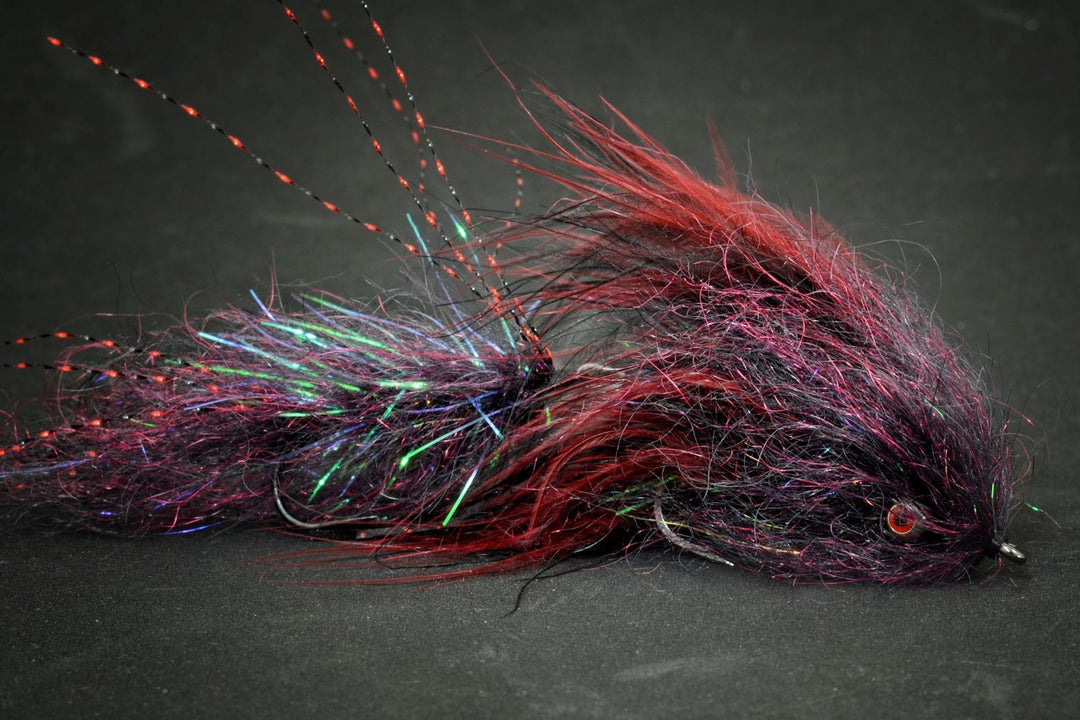
- Coffey's CH Sparkle Minnow — Sculpin — great for aggressive winter browns holding on structure.
- Sculpzilla — Olive — sculpin profile that fishes well in deeper runs.
- Sculpzilla — Black — darker baitfish imitation for low-light or tannic pockets.
- Galloup's Slick Willy — Whitefish — articulated baitfish for bigger fish on the move.
Stonefly / Big-Nymph Options (heavy point flies)
- Tungsten Pat's Rubber Legs — Tan & Brown — an excellent heavy stonefly-profile point fly.
- Pat's Rubber Legs — Brown — bulky profile for deep tails and winter-holding fish.
- Goodspeed's Private Stock Stone — Golden — realistic stone profile, good as a point.
- 20 Incher Tungsten — heavy, high-visibility bead nymph for big-stone presentations.
Tactics & Tips
- Primary winter method: accurate nymphing (euro, tight-line, or indicator) in tailouts, seams, and deep heads.
- Rigging: 0X–4X long leaders for dries; 3X–5X fluorocarbon for nymphs. Use small droppers (midge/zebra) beneath a larger point fly in heavy water.
- Depth control: tungsten beadheads and short, heavy jigs help get baits into the feeding lane fast. Use strike indicators when visibility is good or currents are complex.
- Dries: when midges or small baetis adults appear, downsize and fish still—CDC emergers and thin parachutes are lethal on cautious rises.
- Streamers: slow, deliberate strips along rock shelves and deep seams will pull reaction strikes from winter browns; fish during warming spells or low-angle light.
- Approach: keep low and quiet, fish one run thoroughly, and work tailouts systematically. Avoid disturbing redds and spawning fish.
- Rigging: 0X–4X long leaders for dries; 3X–5X fluorocarbon for nymphs. Use small droppers (midge/zebra) beneath a larger point fly in heavy water.
- Depth control: tungsten beadheads and short, heavy jigs help get baits into the feeding lane fast. Use strike indicators when visibility is good or currents are complex.
- Dries: when midges or small baetis adults appear, downsize and fish still—CDC emergers and thin parachutes are lethal on cautious rises.
- Streamers: slow, deliberate strips along rock shelves and deep seams will pull reaction strikes from winter browns; fish during warming spells or low-angle light.
- Approach: keep low and quiet, fish one run thoroughly, and work tailouts systematically. Avoid disturbing redds and spawning fish.
Where to Start Today
- Pueblo tailwater — start with black zebra midge under an indicator; switch to a short euro setup with a poacher anchor if fish lock on deep seams.
- Lower Freestone (Salida → Cañon City) — try tungsten darts and Frenchie jigs in tailouts; when fish rise, present small CDC caddis or a PMD emerger.
- Structure & run edges — cast articulated sculpin or sparkle minnows into foam lines during mid-day warming windows.
Final Notes & Safety
Water is cold: use layered, waterproof clothing and a life vest if floating. Watch for thin ice and slick banks. Check local access rules and closures before you go.