Ausable River Fly Fishing Report - January 1/18/2026
AUSABLE RIVER FLY FISHING REPORT
Michigan's Au Sable — Winter Outlook & Tactics
Report Date: January 18, 2026 | Next Update: January 25, 2026
Current River Conditions
Winter fishing—low activity but excellent opportunity for thoughtful subsurface tactics. Water is cold and trout are conserving energy: slow, deliberate presentations win.
Flows & Clarity
Typical winter flows — generally moderate and wadeable at many public access points. Visibility tends to be good in low-runoff stretches; watch for stained water after any thaw or rain.
Water Temperature
Current range: low to mid 30s °F (around freezing at night). Fish are sluggish — avoid long fights and deep wading.
Weather & Hazards
Cold mornings with daytime thaw potential; plan for snow, sleet or wind. Hidden ice shelves and fallen trees are common — use caution at shorelines and boat launches.
Access & Angling Pressure
Winter angling is light. Popular parking and roadside put-ins may be plowed, but many side roads can be slick — carry traction and layer up.
Winter Hatch & Food Notes
| Organism | Activity | Size & Notes |
|---|---|---|
| Midges (chironomids) | Primary winter food — consistent but subtle | Very small (#18–24). Indicator or sighter rigs over depth hold a lot of fish. |
| Baetis / BWO | Limited, low-level emergences on milder days | #20–22 — best mid/late morning during brief warm spells. |
| Caddis | Occasional; evening/nearflow margins | #16–20 — soft-hackle or jigged caddis pupa can trigger takes. |
| Stoneflies / Salmonflies | Absent in mid-winter | Save big stonefly tactics for spring and summer. |
General Tactics for January
- Fish slowly. Cold water reduces trout metabolism — longer drifts and subtle jigging are more effective than aggressive stripping.
- Subsurface nymphing is the bread-and-butter: Euro-style tight-line rigs, tungsten bead jigs, and indicator rigs are all productive.
- Target deeper tails, seams and undercut banks. In low light (overcast or dusk), small streamers retrieved slowly can catch lethargic browns.
- Shorten fights and handle fish minimally in low temperatures. Consider barbless hooks or pinching barbs to speed release.
- Subsurface nymphing is the bread-and-butter: Euro-style tight-line rigs, tungsten bead jigs, and indicator rigs are all productive.
- Target deeper tails, seams and undercut banks. In low light (overcast or dusk), small streamers retrieved slowly can catch lethargic browns.
- Shorten fights and handle fish minimally in low temperatures. Consider barbless hooks or pinching barbs to speed release.
Recommended Flies (matched to in-stock patterns)
Below are winter workhorses pulled from current stocked patterns — links go to the corresponding patterns so you can reference sizes and pick colors to match local water.
Nymphs (primary winter focus)
- Egan's Poacher - Olive — great as an anchor fly for tight-line or indicator rigs.
- Egan's Poacher - Black — a darker option that fishes well in deeper water and lower light.
- Egan's Thread Frenchie Jig - Olive — a versatile jig for tight presentations near the bottom.
- Tungsten Dart - Red — quick get-down beads and dart profiles for slow trout.
Midges & Micro Nymphs
- Black Zebra Midge (TBH) — indispensable through winter; use tiny droppers or sighters.
- Black Mirage Zebra Midge — a subtle bead-head option for indicator rigs.
- Tungsten Zebra Midge Thin - Black — extra weight for deeper runs.
- Jig Zebra Midge - Black — jigged presentation for seams and slack water.
Drys & Emergers (limited but useful on mild days)
- Corn-fed Caddis (CDC) - Tan — a high-visibility caddis for subtle evening activity.
- Corn-fed Caddis (CDC) - Peacock — soft CDC dries that sit low and look natural.
- Parachute - Blue Wing Olive — handy when Baetis pulses occur during mild afternoons.
- Corn-fed Caddis (CDC) - Olive — another reliable CDC profile for low-activity days.
Streamers & Small Predators
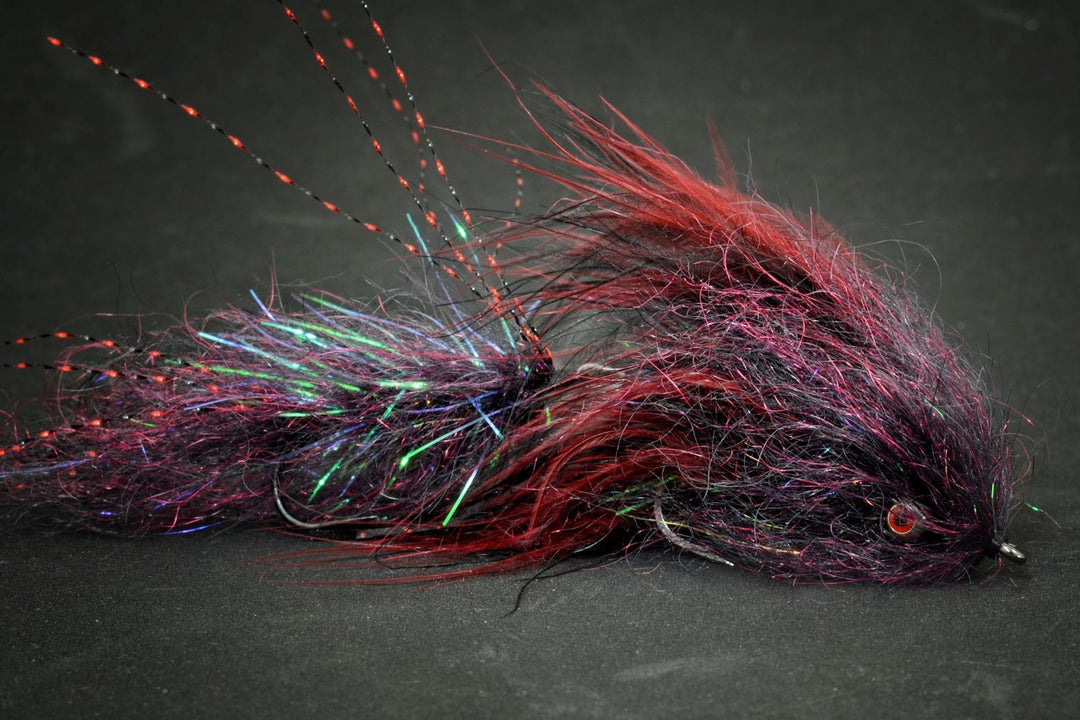
- Coffey's CH Sparkle Minnow - Sculpin — top choice for targeting larger browns in deep runs.
- Sculpzilla - Olive — sculpin imitation that triggers reaction bites.
- Sculpzilla - Black — darker profile for low-light or stained conditions.
- Near Nuff Sculpin - Olive — a compact sculpin for tight structure work.
Eggs & Dirty-Worm Patterns (winter staples)
- Slush Egg - Apricot — excellent as a short, attractor-style anchor on indicators.
- EZ Egg Fl. Sunburst - Barbless — bright, visible option for deep sighters and stillwater-style presentations.
- Olsen's Tungsten Taco Egg - Sockeye Pink (Barbless) — tungsten gets your egg into the strike zone quickly.
- Twister Egg Fl. Sunburst - Barbless — compact and very snag-resistant on an indicator dropper.
Quick Rigging & Presentation Notes
Two approaches that dominate here:
- Euro / tight-line nymphing with a weighted point fly and subtle rod movement for feel.
- Indicator rigs with a long leader (4–6 ft) and small tandem nymphs for deep tails and slow runs.
- Euro / tight-line nymphing with a weighted point fly and subtle rod movement for feel.
- Indicator rigs with a long leader (4–6 ft) and small tandem nymphs for deep tails and slow runs.
Streamer work:
Use heavier streamers or an articulated sculpin with slow, two-second strips and pauses. Fish near structure and deep seams where trout will conserve energy.
Leader setups:
9–10 ft 4X–6X tapered leaders with 1–3 ft of fluorocarbon tippet for stealth; beef up to 2X–3X when using large streamers.
Handling & Ethics
Keep fish in the water as much as possible. Cold-water physiology increases mortality from handling stress — quick photos, gentle nets, and immediate release.
Where to Focus
- Deep tails of medium runs and the heads of pools where trout stage and conserve energy.
- Undercut banks and any submerged wood or rock that generate holding seams.
- Slack-water pockets upstream of riffles — midges and small emergers often concentrate there.
Final Notes
Winter sessions on the Au Sable favor patience, careful presentation and subsurface tactics. Pack warm layers, a thermos, and a reliable sighter or indicator rig. If you must hike roads or streambanks, bring traction devices and a buddy system — winter can change fast.