
Bitterroot River Fly Fishing Report - January 1/4/2026
BITTERROOT RIVER FLY FISHING REPORT
Western Montana — Bitterroot Valley
Report Date: January 4, 2026 | Next Update: January 11, 2026
Current River Conditions
Winter patterns are in place — clear, cold water with fish concentrated low and slow. Expect the most consistent action with nymph rigs and winter-weighted jigs; midges dominate the surface activity.
Flows & Clarity
Flow: Low–moderate for the season (varies by reach)
Clarity: Clear in most reaches — fish see well, present subtly
Note: Watch for deeper backchannels and tailouts where fish hold
Flow: Low–moderate for the season (varies by reach)
Clarity: Clear in most reaches — fish see well, present subtly
Note: Watch for deeper backchannels and tailouts where fish hold
Water Temperature
Current: ~34–40°F (1–4°C)
Range: Near-freezing in shallow pockets to low 40s in slow, deep runs
Trend: Cold-stable; expect slower fish but willing to eat well-presented offerings
Current: ~34–40°F (1–4°C)
Range: Near-freezing in shallow pockets to low 40s in slow, deep runs
Trend: Cold-stable; expect slower fish but willing to eat well-presented offerings
Weather & Forecast
Early January: Cold mornings, mild daytime sunshine; light winds typical
Forecast: Intermittent clouds and cool snaps possible — bring layered clothing
Early January: Cold mornings, mild daytime sunshine; light winds typical
Forecast: Intermittent clouds and cool snaps possible — bring layered clothing
Regulations & Access
Check local access points; many public put-ins remain open in winter.
Hoot-owl (evening) rules apply on upper stretches — plan your fishing window accordingly. Respect landowner signs on private sections.
Check local access points; many public put-ins remain open in winter.
Hoot-owl (evening) rules apply on upper stretches — plan your fishing window accordingly. Respect landowner signs on private sections.
What the Bugs Tell Us (Hatch & Surface Activity)
| Insect | What to Expect | When to Fish |
|---|---|---|
| Midges | Primary surface activity — emergers and buzzer pupa are the focus. Small dries and emergers will trigger selective takes. | All day; brief spikes mid- to late-morning and during warm sunny spells |
| Baetis / Small Mayflies | Limited but present — short spawns or emergent activity on mild afternoons. | Midday on warm, calm days |
| Caddis | Very light; watch late afternoons in softer pockets and slower seams. | Late afternoon / early evening |
| Stoneflies / Salmonflies | Not a winter factor — focus on nymph/larval stages if water is warm in springlike windows. | Not applicable in January |
| Subsurface (Nymphs & Leeches) | Trout feed down and out: euro nymph rigs, tungsten jigs, and leech patterns take the bulk of fish now. | All day — concentrate on deep seams, tails of pools and undercut banks |
Recommended Patterns (linked)
Below are winter-tested selections from current stocked patterns — grouped by tactic. Follow the notes for how to fish each pattern.
Nymphs & Tungsten Jigs (go-to tactics)
- Egan's Poacher - Olive — excellent as an anchor fly or aggressive jig when fish sit deep; pairs well with a small dropper.
- Egan's Poacher - Black — darker, high-contrast option for stained pockets and low light.
- Egan's Thread Frenchie Jig - Olive — a winter workhorse nymph jig; great slow-bouncing along the bottom.
- Tungsten Dart - Red — use as point fly on an indicator or tight-line for targeting mid-depth fish.
- Pheasant Tail - Tungsten — classic mayfly-nymph profile in a winter beadhead configuration.
Midges & Tiny Emergers (surface and sub-surface)
- Black Zebra Midge (TBH) — tungsten zebra-style midges for indicator or Euro-style rigs in clear, deep water.
- Top Secret Midge — simple, effective emergent/midge imitation for picky winter trout.
- Pat's Midge — a go-to small dry/emergent pattern when tiny rise-forms appear.
- Top Secret Midge (alternate sizes) — fish different sizes on a dropper or under an indicator to dial presentation.
Streamers & Larger Subsurface (when fish activate)
- Egan's Poacher - Olive — fishes like a small aggressive bait; strip slowly along structure.
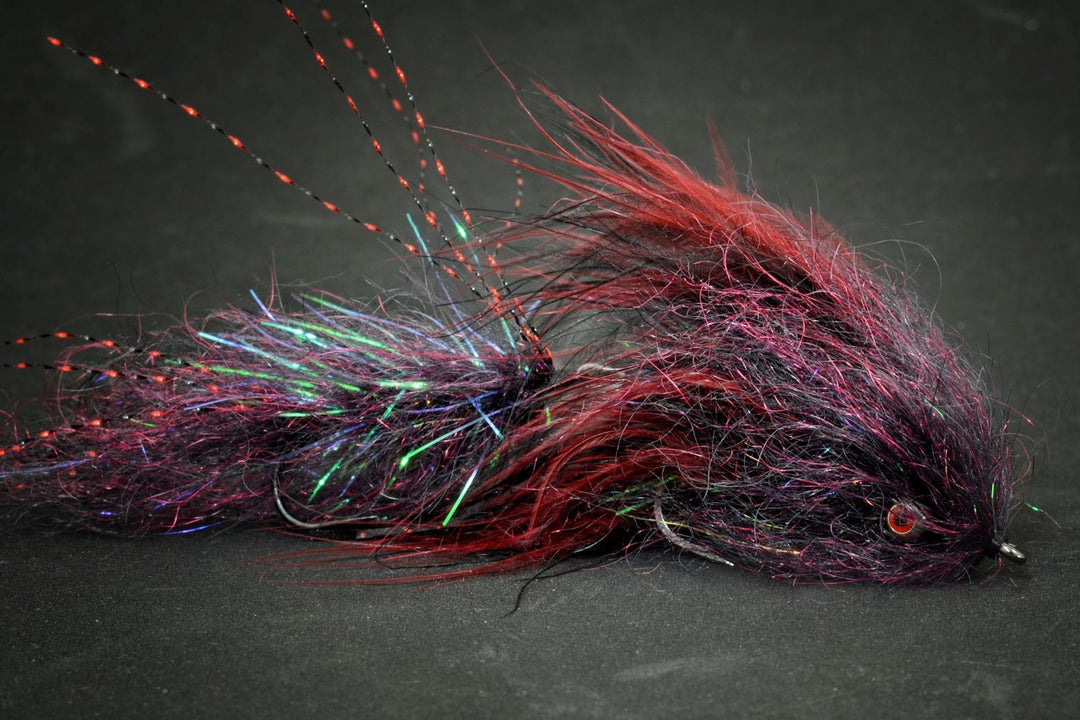
- Coffey's CH Sparkle Minnow Sculpin — sculpin profile for aggressive winter trout holding on structure.
- Sculpzilla - Olive — excellent for deep runs and cutbanks; use a slow strip/pause cadence.
- Near Nuff Sculpin - Olive — durable baitfish/ sculpin option for swings and quick strips.
Small Dry Fly & Emerger Options (for soft surface activity)
- Corn-fed Caddis (CDC) - Tan — great for light caddis activity in calmer pockets.
- Parachute - Blue Wing Olive — versatile small BWO-style dry for any minimal mayfly activity.
- Stealth Link Mercer - PMD — useful if you see PMD-type dun activity on sunny afternoons.
- Sparkle Dun - PMD (cream/yellow) — emerger/dun profile for isolated rises.
Eggs, Worms & Attractors (stillwater-style tactics on slow winter days)
- Slush Egg - Apricot — soft, slightly dirty egg pattern that can trigger opportunistic trout.
- Sunny Side Up - Fluorescent Orange — attention-grabber for deep fish on a dropper rig.
- EZ Egg - Fl. Sunburst (barbless) — low-bulk egg option for indicator fishing.
- Twister Egg - Fl. Sunburst — compact egg for tight presentations and picky days.
Tactics & Where to Fish
Primary tactics for Jan 4, 2026:
- Euro/indicator nymphing: fish tungsten-jig or heavy beadhead nymphs on a short, tight leader. Target deep tails, seams and the heads of pools. Keep flies bouncing the bottom.
- Swing/strip streamers slowly along cutbanks, boulders and logjams; use a pause to let a lethargic trout commit.
- Midge tactics: size down (20–24) on emergers and zebra-style midge patterns under an indicator or on a long dropper. Tiny dry midge or para-midge will produce when fish are sipping.
- Winter dry-dropper: small emerger dry suspended above a tungsten jig can cover both selective rises and feeding fish beneath the surface.
- Time of day: mid-morning to mid-afternoon sees the most activity. On bright, calm days fish may key to occasional surface midge activity.
- Euro/indicator nymphing: fish tungsten-jig or heavy beadhead nymphs on a short, tight leader. Target deep tails, seams and the heads of pools. Keep flies bouncing the bottom.
- Swing/strip streamers slowly along cutbanks, boulders and logjams; use a pause to let a lethargic trout commit.
- Midge tactics: size down (20–24) on emergers and zebra-style midge patterns under an indicator or on a long dropper. Tiny dry midge or para-midge will produce when fish are sipping.
- Winter dry-dropper: small emerger dry suspended above a tungsten jig can cover both selective rises and feeding fish beneath the surface.
- Time of day: mid-morning to mid-afternoon sees the most activity. On bright, calm days fish may key to occasional surface midge activity.
Quick Rig Suggestions
Indicator Rig
9–10' leader, small foam or yarn indicator, 18–36" to point fly (tungsten jig or midge), 6–12" drop to trailing nymph.
9–10' leader, small foam or yarn indicator, 18–36" to point fly (tungsten jig or midge), 6–12" drop to trailing nymph.
Euro / Tight-line
Short, stiff leader, 10–12' tippet straight to fly, tungsten-jig point; small trailing flies optional.
Short, stiff leader, 10–12' tippet straight to fly, tungsten-jig point; small trailing flies optional.
Streamer Setup
6–8wt rod, sink-tip or fast intermediate line, slow strip cadence; fish deep structure and the lower third of runs.
6–8wt rod, sink-tip or fast intermediate line, slow strip cadence; fish deep structure and the lower third of runs.
Dry/Dropper
Small emerger or para-dun as the dry, 18–30" dropper to tungsten midge or jig for fish feeding sub-surface.
Small emerger or para-dun as the dry, 18–30" dropper to tungsten midge or jig for fish feeding sub-surface.
Local Notes & Safety
- Parking and put-in: many public access points are still clear; be mindful of icy approaches and wear traction on boots.
- Winter angling: fish deeper seams and avoid pushing through shallow riffles where fish are not holding.
- Leave no trace: pack out what you pack in — winter access is limited so keep it clean for everyone.