Green River Fly Fishing Report - April 4/5/2026
GREEN RIVER FLY FISHING REPORT
Spring, cold-water focus — deep nymphing, slow streamers, midges & BWO
Report Date: April 5, 2026 | Next Update: April 12, 2026
Current River Conditions
Cold-water period — think subsurface. Surface action is limited; fish are keyed to slow, deeper seams and pockets. Focus on tight presentations (Euro/deep indicator) and slow streamer work near structure.
Flows & Clarity
Flow Rate: Variable; expect near baseflows in spring runoff window (check local gauge)
Water Clarity: Generally clear to slightly stained in runs; pockets hold silt
Typical Sections: Tailwaters and tailouts are clearest
Flow Rate: Variable; expect near baseflows in spring runoff window (check local gauge)
Water Clarity: Generally clear to slightly stained in runs; pockets hold silt
Typical Sections: Tailwaters and tailouts are clearest
Water Temperature
Current: Cold — typically mid to upper 30s–mid 40s °F (2–7°C)
Trend: Slowly warming but still within cold-water trout comfort zone
Current: Cold — typically mid to upper 30s–mid 40s °F (2–7°C)
Trend: Slowly warming but still within cold-water trout comfort zone
Weather Conditions
Forecast: Cool mornings, milder afternoons; variable cloud cover and light wind
Best Window: Midday warmth can activate low-level BWO and midge emergences
Forecast: Cool mornings, milder afternoons; variable cloud cover and light wind
Best Window: Midday warmth can activate low-level BWO and midge emergences
Access & Safety
Access: Standard public put-ins and bank access open (ice mostly gone)
Safety: Bring warm layers, wading staff; watch for slick rocks and high, cold flows
Access: Standard public put-ins and bank access open (ice mostly gone)
Safety: Bring warm layers, wading staff; watch for slick rocks and high, cold flows
Hatch Chart & Insect Activity (April)
| Insect | Size | Activity Level | Prime Time |
|---|---|---|---|
| Midges (Chironomids) | #18–24 | Primary food; active subsurface / emergers ⭐⭐⭐ | Throughout day; best near slow tailouts & riffle tails |
| BWO (Baetis) | #18–22 | Low-to-moderate; short windows midday if temps nudge upward ⭐⭐ | Midday to early afternoon on mild days |
| Small Mayfly Emergers / PMD | #16–20 | Light; valuable subsurface target ⭐⭐ | Late morning to afternoon |
| Streamers / Baitfish | Sizes vary (small to large) | Fish aggressive to slow-moving streamers near structure ⭐⭐ | All day — best low-light and during insect pulses |
Recommended Flies (cold-water focus)
Patterns below are matched to the fly inventory records; prioritized by shop rank and season-suitability for early April (deep nymphing, small emergers/midges, slow streamers).
Nymphs & Tungsten Jigs (deep nymphing / Euro)
- Egan's Thread Frenchie Jig — Olive (Rank 4) — clean jig profile for deep rigs and Euro setups
- Tungsten Dart — Red (Rank 5) — darting bead nymph for tight seams
- Pheasant Tail Tungsten (Rank 16) — classic PT nymph in tungsten weight
- Egan's Frenchie (Rank 12) — versatile beadhead nymph for mayfly/imitation work
Midges & Small Subsurface (indicator / tight presentations)
- Black Zebra Midge (TBH) (Rank 48) — winter/spring midge staple
- Top Secret Midge (Rank 109) — small, slim midge for indicator rigs
- Jujubee Midge — Zebra (Rank 288/224) — indicator-friendly pattern
- Bling Midge — Black (Rank 252) — subtle flash for picky fish
Perdigon / Perdigon-Style Nymphs (tight, dense presentations)
- Roza's World Spain Perdigon — Barbless (Rank 13)
- Egan's Warrior Perdigon — Rainbow (Rank 29)
- Olsen's Quilldigon — Olive (Barbless) (Rank 26)
- Moore's Next Gen Perdigon — Peacock/Orange (Barbless) (Rank 451)
Emergers & Small Dry (BWO / PMD windows)
- Parachute — Blue Wing Olive (BWO) (Rank 31) — small, visible BWO parachute
- Stealth Link Mercer — PMD (Rank 32) — PMD emerger/dun
- Barr's Flashback Emerger — BWO (Rank 72) — excellent emerger profile
- Antonio's Adult BWO (Rank 102)
Streamers & Leeches (slow stripping — cold-water technique)
- Egan's Poacher — Olive (Rank 1) — go-to slow, bulky streamer for tailwater structure
- Egan's Poacher — Black (Rank 2)
- Coffey's CH Sparkle Minnow — Sculpin (Rank 7) — sculpin/baitfish profile for deeper runs
- Sculpzilla — Olive (Rank 65) — articulated/big profile for slow strips
Tactics & Tips — Cold-Water Focus
Deep nymphing (primary). Use Euro/indicator rigs with tungsten jigs and small midge/perdigon patterns. Run a heavy point (Tungsten Frenchie, Tungsten Dart, Pheasant Tail Tungsten) with 4–8 ft of thin tippet to a lighter dropper (Zebra/Perdigon) to fish tight to the bottom and across seams.
Midge strategy. When fish are keyed to buzzers and midge pupae, downsize flies to #18–24, trim leaders, use thin indicators or a bare strike indicator (small yarn/foam) and fish slowly. Match the color and shape — black/olive/red midge variants work well in low-light and cool water.
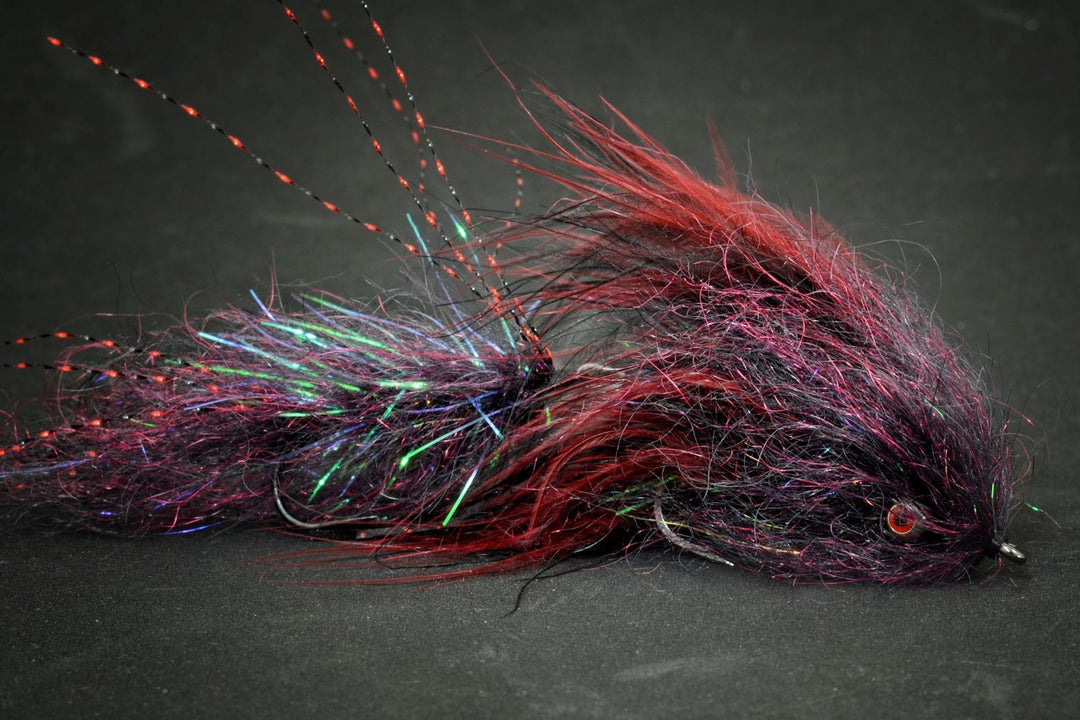
Streamer game (slow & deliberate). Cold fish prefer slower, heavier profiles: cast upstream into deep water or along the far bank, let sink, then very slow strips with 1–2 second pauses. Focus on deep seams, log tails, boulder edges, and foam lines. Egan's Poacher and compact sculpin imitations are excellent.
Leader & tippet. 9–12 ft leaders for dry/indicator rigs; add 6–10 ft of 3–6X tippet for midge/BWO presentations. For streamers use stronger tippet (6–10 lb fluorocarbon or 0X–3X) and a stout leader to absorb pulls.
Morning vs. afternoon. Morning = deeper, slower nymphing in seams and drop-offs. Afternoon (if temps rise) = short BWO/midge surface activity — switch to emerger/parachute setups. Keep dry fly options small and stealthy during any surface pulse.
Midge strategy. When fish are keyed to buzzers and midge pupae, downsize flies to #18–24, trim leaders, use thin indicators or a bare strike indicator (small yarn/foam) and fish slowly. Match the color and shape — black/olive/red midge variants work well in low-light and cool water.
Streamer game (slow & deliberate). Cold fish prefer slower, heavier profiles: cast upstream into deep water or along the far bank, let sink, then very slow strips with 1–2 second pauses. Focus on deep seams, log tails, boulder edges, and foam lines. Egan's Poacher and compact sculpin imitations are excellent.
Leader & tippet. 9–12 ft leaders for dry/indicator rigs; add 6–10 ft of 3–6X tippet for midge/BWO presentations. For streamers use stronger tippet (6–10 lb fluorocarbon or 0X–3X) and a stout leader to absorb pulls.
Morning vs. afternoon. Morning = deeper, slower nymphing in seams and drop-offs. Afternoon (if temps rise) = short BWO/midge surface activity — switch to emerger/parachute setups. Keep dry fly options small and stealthy during any surface pulse.
Quick Rigs & Setups
Euro / Deep Nymph
Rod: 10–11 ft 3–6 wt (Euro); Weight forward line for indicator rigs.
Rig: Heavy tungsten jig (12–14 or appropriate) as point, 8–12" to trailing smaller perdigon/zebra midge; short, tight leader.
Rod: 10–11 ft 3–6 wt (Euro); Weight forward line for indicator rigs.
Rig: Heavy tungsten jig (12–14 or appropriate) as point, 8–12" to trailing smaller perdigon/zebra midge; short, tight leader.
Indicator Nymph
Indicator: small yarn or foam 6–10 ft above heavy jig.
Flies: Tungsten Frenchie/Frenchie jigs + small midge or PT dropper.
Indicator: small yarn or foam 6–10 ft above heavy jig.
Flies: Tungsten Frenchie/Frenchie jigs + small midge or PT dropper.
Streamer
Rod: 6–8 wt for distance; slow-stripping with short, powerful strips.
Retrieve: sink, then slow 1–2 second strips; pause; vary depth.
Rod: 6–8 wt for distance; slow-stripping with short, powerful strips.
Retrieve: sink, then slow 1–2 second strips; pause; vary depth.
Dry/Emerger (BWO)
Fly sizes: #18–22 parachute or emerger; fish tight to foam lines or slow seams when a hatch shows.
Fly sizes: #18–22 parachute or emerger; fish tight to foam lines or slow seams when a hatch shows.