San Juan River Fly Fishing Report - April 4/12/2026
SAN JUAN RIVER FLY FISHING REPORT
Upper & Mid San Juan — Spring cold-water tactics
Report Date: April 12, 2026 | Next Update: April 19, 2026
Current River Conditions (overview)
Early spring conditions: water is cold and fish are keyed to slow, subsurface presentations. Focus on deep nymphing, small midge/BWO tactics and slow, deliberate streamer work in deeper runs and structure.
Flows & Clarity
Flow: typical spring-run variable — check local gage before launching (conditions change with runoff).
Clarity: generally clear to lightly stained in most runs; pockets of tannin/stain possible after snowmelt.
Flow: typical spring-run variable — check local gage before launching (conditions change with runoff).
Clarity: generally clear to lightly stained in most runs; pockets of tannin/stain possible after snowmelt.
Water Temperature
Typical early-April range: roughly mid-to-upper 30s to low 40s °F (2–6°C).
Fish are holding deep and low in cold water — keep offerings near the bottom.
Typical early-April range: roughly mid-to-upper 30s to low 40s °F (2–6°C).
Fish are holding deep and low in cold water — keep offerings near the bottom.
Weather
Spring pattern — cool mornings, warming through the day. Wind can pick up mid-day. Dress in layers; waders and insulated under-layer recommended.
Spring pattern — cool mornings, warming through the day. Wind can pick up mid-day. Dress in layers; waders and insulated under-layer recommended.
Access & Regulations
Public access exists at many put-ins — check landowner/agency access for specific reaches.
IMPORTANT: Confirm current season regulations and any special sections (catch-and-release, tackle restrictions, or closures) with the state agency before you fish. Rules can vary by reach (Utah / New Mexico pockets). Always carry current license and comply with posted restrictions.
Public access exists at many put-ins — check landowner/agency access for specific reaches.
IMPORTANT: Confirm current season regulations and any special sections (catch-and-release, tackle restrictions, or closures) with the state agency before you fish. Rules can vary by reach (Utah / New Mexico pockets). Always carry current license and comply with posted restrictions.
Seasonal Hatch & Insect Activity (April)
| Insect / Type | Size | Activity | Prime Time |
|---|---|---|---|
| Midges (various stages) | #18–24 | High — consistent subsurface activity & emergers | Mornings–evenings (all day low-level activity) |
| Blue‑Winged Olives (BWO / Baetis) | #16–22 | Light to moderate — adults and emergers on calm days | Late morning to mid‑afternoon; pockets of surface sipping on calm evenings |
| PMD / small mayflies (limited) | #16–18 | Light — emergers and subsurface activity | Warmest part of day if present |
| Caddis / chironomids (stillwater feeders near slack water) | #14–20 | Low to moderate — use emergers/nymphs in pockets | Evening emergence in calmer pockets |
Recommended Flies (season‑appropriate — deep nymphing, midges/BWO, streamers)
Nymphs & Tungsten Jigs
- Egan's Thread Frenchie Jig - Olive — top euro/jig nymph for getting deep and tight to the bottom (beadhead jig).
- Roza's World Spain Perdigon - Barbless — slim, slick perdigon for tight currents and picky takes.
- Pheasant Tail Tungsten — a go‑to nymph for BWOs and general mayfly imitation.
- Tungsten Pat's Rubber Legs - Tan & Brown — heavier stonefly/small nymph profile for fast seams and drop‑offs.
- Tungsten Split Case Nymph - PMD — effective when PMD/baetis nymphs dominate the menu.
Midges & Small Subsurface (strategic winter/spring options)
- Black Zebra Midge (TBH) — winter/spring powerhouse tied heavy for indicator and euro rigs.
- Top Secret Midge — tiny, realistic midge for picky fish on subtle takes.
- Jujubee Midge - Olive — thin profile, great under an indicator or as droppers.
- Bling Midge - Black — slightly flashier option when fish key on a hint of profile/flash.
- Jujubee Midge - Zebra — zebra pattern for high‑vis strikes under indicator rigs.
BWO / Small Mayfly Drys & Emergers
- Parachute - Blue Wing Olive — a solid dry for opportunistic BWO rises on calm days.
- Antonio's Adult BWO — slender adult imitation for subdued sipping fish.
- Barr's Flashback Emerger - BWO — perfect when fish target emerger stage below the surface film.
- Bead Head Barr Emerger - BWO — weighted emergers for indicator or euro nymph setups.
Slow Streamers & Baitfish / Sculpin Imitations
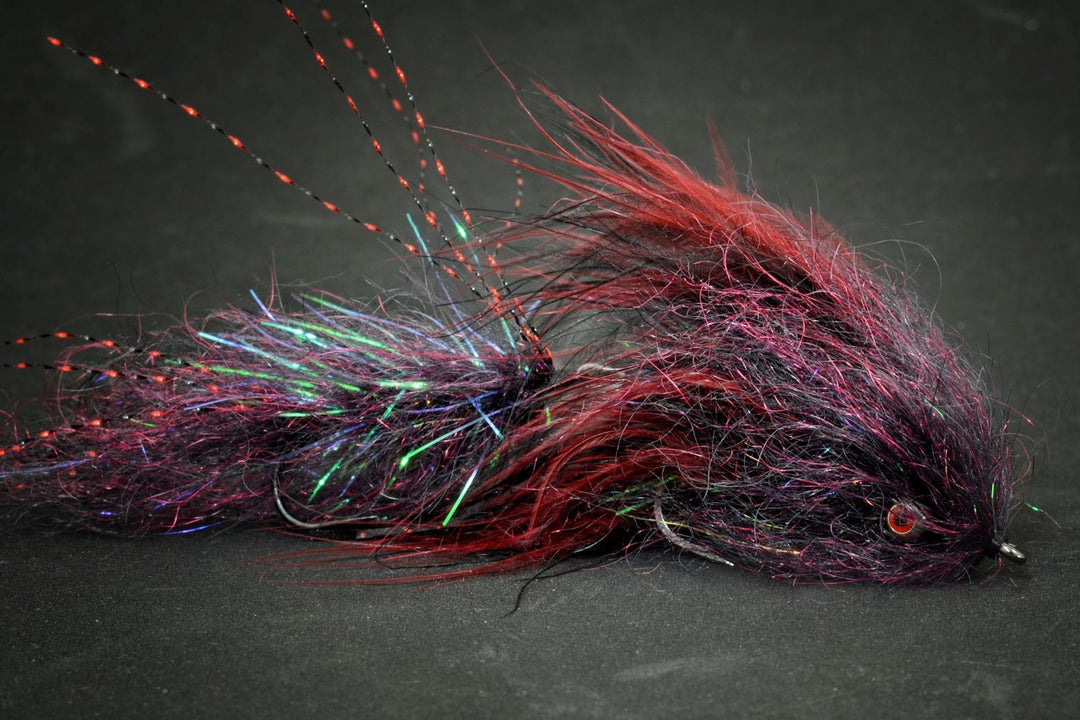
- Coffey's CH Sparkle Minnow Sculpin — sculpin/baitfish profile for slow strip or short pauses in deep runs.
- Sculpzilla - Olive — articulated sculpin-style streamer for heavier water and structure.
- Galloup's Slick Willy - Brownie — classic articulated baitfish for sweep‑and‑pause retrieves.
- Baby Fat Minnow - Olive & White — compact minnow pattern for slow strip and twitch presentations.
- Near Nuff Sculpin - Olive — wider profile sculpin imitation for aggressive strikes in spring holding water.
Soft‑Hackles, Sowbugs & Emerger‑style Jig Options
- Soft Hackle Pheasant Tail Jig - Barbless — excellent as a dropper or as the point in indicator rigs.
- CDC Soft Hackle Tailwater Sowbug Jig - Rainbow — great for soft, realistic movement near the bottom.
- Bead Head Soft Hackle Pheasant Tail — a go‑to when fish want slightly more weight and lifelike motion.
- CDC French Jig — compact, fish‑friendly jig for indicator and tight rubble work.
Tactics & Tips — Cold‑water Focus
- Deep Nymphing (primary strategy): fish a tungsten jig or heavy perdigon as the point with trailing dropper(s) of smaller midges/BWO nymphs. Use long leaders (12–18') and thin tippets (5X–7X for tiny midge flies). Pay attention to subtle takes — indicator twitch or slight leader movement often signals a refusal-to-strike moment; set soft.
- Rig examples: Euro-style short leader straight to a 2–3' fluorocarbon tippet with a heavy perdigon/jig on the point and a lighter pheasant tail/pta dropper 12–18" above; OR indicator rig with beadhead frenchie/jig point and midge dropper above.
- Midge/BWO tactics: fish small (#18–24) patterns in the film or just below — slow, dead drift or very slow hand-twist retrieves on emergers. When fish rise to emergers or film, switch to a small parachute BWO or emerger imitation.
- Slow streamer work: fish deeper runs, cutbanks and structure with slow strip‑pause retrieves. Use medium‑weight sink tips or weighted articulated sculpins; pauses and short pulls (1–3 seconds) trigger lethargic spring fish. Change retrieve speed slowly — cold fish prefer slow presentations.
- Where to target: deep seams, tailouts, boulder seams, undercut banks, deep riffle tails and anywhere current funnels food near the bottom. Look for fish facing current with minimal movement — present flies low and slow.
- Presentation notes: keep drag out of drifts, mend early and often. In cold water, fish will often follow and take at the very end of your drift — give the fly an extra second to be eaten before a hard hookset.
- Rig examples: Euro-style short leader straight to a 2–3' fluorocarbon tippet with a heavy perdigon/jig on the point and a lighter pheasant tail/pta dropper 12–18" above; OR indicator rig with beadhead frenchie/jig point and midge dropper above.
- Midge/BWO tactics: fish small (#18–24) patterns in the film or just below — slow, dead drift or very slow hand-twist retrieves on emergers. When fish rise to emergers or film, switch to a small parachute BWO or emerger imitation.
- Slow streamer work: fish deeper runs, cutbanks and structure with slow strip‑pause retrieves. Use medium‑weight sink tips or weighted articulated sculpins; pauses and short pulls (1–3 seconds) trigger lethargic spring fish. Change retrieve speed slowly — cold fish prefer slow presentations.
- Where to target: deep seams, tailouts, boulder seams, undercut banks, deep riffle tails and anywhere current funnels food near the bottom. Look for fish facing current with minimal movement — present flies low and slow.
- Presentation notes: keep drag out of drifts, mend early and often. In cold water, fish will often follow and take at the very end of your drift — give the fly an extra second to be eaten before a hard hookset.
Quick Gear Checklist
Rods & Lines
4–6 wt for nymphs and dries; 6–8 wt for streamers. Euro setups or long‑nose nymph rods are excellent for deep presentations. Use sink tip or full sink for deep streamer work.
4–6 wt for nymphs and dries; 6–8 wt for streamers. Euro setups or long‑nose nymph rods are excellent for deep presentations. Use sink tip or full sink for deep streamer work.
Leader & Tippet
Euro leaders 9–12 ft or indicator leaders 9–14 ft. Tippet: 4X–7X depending on fly size; 6X–7X for tiny midges & BWO emergers.
Euro leaders 9–12 ft or indicator leaders 9–14 ft. Tippet: 4X–7X depending on fly size; 6X–7X for tiny midges & BWO emergers.
Terminal Tackle
Assortment of tungsten jigs (#12–18), small beadhead nymphs, tiny midge emerger patterns and 1–3 larger sculpin/streamer patterns (#2–8).
Assortment of tungsten jigs (#12–18), small beadhead nymphs, tiny midge emerger patterns and 1–3 larger sculpin/streamer patterns (#2–8).
Safety
Cold water shock hazard — wear a PFD on a pontoon/boat and wading staff + neoprene socks/waders when wading in spring flows.
Cold water shock hazard — wear a PFD on a pontoon/boat and wading staff + neoprene socks/waders when wading in spring flows.