Potomac River Fly Fishing Report - January 1/4/2026
POTOMAC RIVER FLY FISHING REPORT
Maryland / Virginia / Washington D.C. — Winter Conditions
Report Date: January 4, 2026 | Next Update: January 11, 2026
Current River Conditions
Winter pattern in effect: fish are deep and deliberate. Focus subsurface — nymphs, tungsten jigs and slow strip streamers. Watch for icy access and changing tidal water in lower reaches.
Where to fish
Upper Potomac (non-tidal): deep pools, ledges and current seams for smallmouth and walleye.
Tidal Potomac (below DC bridges): blue catfish and winter hold fish in main channels and deep holes — heed tidal flows.
Upper Potomac (non-tidal): deep pools, ledges and current seams for smallmouth and walleye.
Tidal Potomac (below DC bridges): blue catfish and winter hold fish in main channels and deep holes — heed tidal flows.
Flows & Clarity
Flows: typically normal to slightly elevated for January depending on rainfall; expect stained to murky in runoff windows.
Clarity: variable — pick pockets with clearer seams for sight nymphing.
Flows: typically normal to slightly elevated for January depending on rainfall; expect stained to murky in runoff windows.
Clarity: variable — pick pockets with clearer seams for sight nymphing.
Water Temperature
Typical range: mid 30s to low 40s °F (near-freezing pockets early morning).
Effect: trout and bass are slow; prioritize flies that get and stay deep.
Typical range: mid 30s to low 40s °F (near-freezing pockets early morning).
Effect: trout and bass are slow; prioritize flies that get and stay deep.
Weather & Safety
Forecast: cold snaps possible — dress in layers, wear waterproof insulated boots.
Safety: watch for ice on shorelines; life jacket required for boats. Check MD/VA regulations before fishing tidal zones.
Forecast: cold snaps possible — dress in layers, wear waterproof insulated boots.
Safety: watch for ice on shorelines; life jacket required for boats. Check MD/VA regulations before fishing tidal zones.
What’s Biting / Biology
| Species | Where they're holding | What they're eating |
|---|---|---|
| Smallmouth bass | Deep heads, current seams, rocky drop-offs | Baitfish, crayfish, opportunistic nymphs/leeches |
| Walleye | Deep runs, near big stone, night/low-light windows | Baitfish — slow-strip streamers and larger nymphs |
| Blue catfish (tidal) | Deep tidal channels and holes | Dead or live bait, large streamers near the bottom |
| Trout (occasional) | Cold tailwaters and spring-fed pockets | Midges, emergers, and nymphs near the bottom |
Recommended Flies — Winter Potomac (links to patterns)
On the Potomac in early January you want flies that get deep quickly, read well under indicator/tight-line presentations, and represent baitfish/crayfish/larval food. Below are field-proven patterns from trusted tiers — grouped by approach.
Euro / Indicator Nymphs (go-to choices)
Egan's Poacher — Olive — a compact, fishy anchor nymph that gets down fast for tight-line and indicator rigs.
Egan's Poacher — Black — dark profile for stained water and higher-contrast presentations.
Egan's Thread Frenchie Jig — Olive — small jigged profile that rides hook-up-ready near the bottom.
Tungsten Dart — Red — a darting beadhead that punches through current and triggers reaction takes.
Pheasant Tail Tungsten — classic mayfly-nymph silhouette with tungsten for immediate depth.
Roza's Perdigon (Spain Perdigon) — slim, fast-sinking perdigon for picky winter feeders.
Midges & Zebra Midge Options
Black Zebra Midge (TBH) — winter midge staple for indicator rigs.
Black Mirage Zebra Midge — high-contrast in lower light and cold water.
Tungsten Zebra Midge Thin — Black — micro tungsten option for serious depth and small gape hooks.
Top Secret Midge — a reliable midge when fish key small midges over deep pockets.
Streamers & Baitfish Imitations (slow strips)
Coffey's CH Sparkle Minnow — Sculpin — go-to for bass/walleye on the Potomac's deep structure.
Coffey's Articulated Sparkle Minnow — Sculpin — an articulated, lifelike presentation for larger predators.
Sculpzilla — Olive — sculpin profile for aggressive strip-work near the bottom.
Galloup's Slick Willy — Whitefish — classic baitfish pattern for slow, pulsed strips.
Crayfish / Cray jigs & heavier sinkers (bass/walleye focus)
Joe's Mini Crayfish Jig — compact, deadly on bass holding on rock ledges.
Nine LB Hammer — Crawfish — meaty crawler for bigger winter smallmouth.
Jan's Trout Crayfish — Olive — realistic profile for slow retrieves in deep holes.
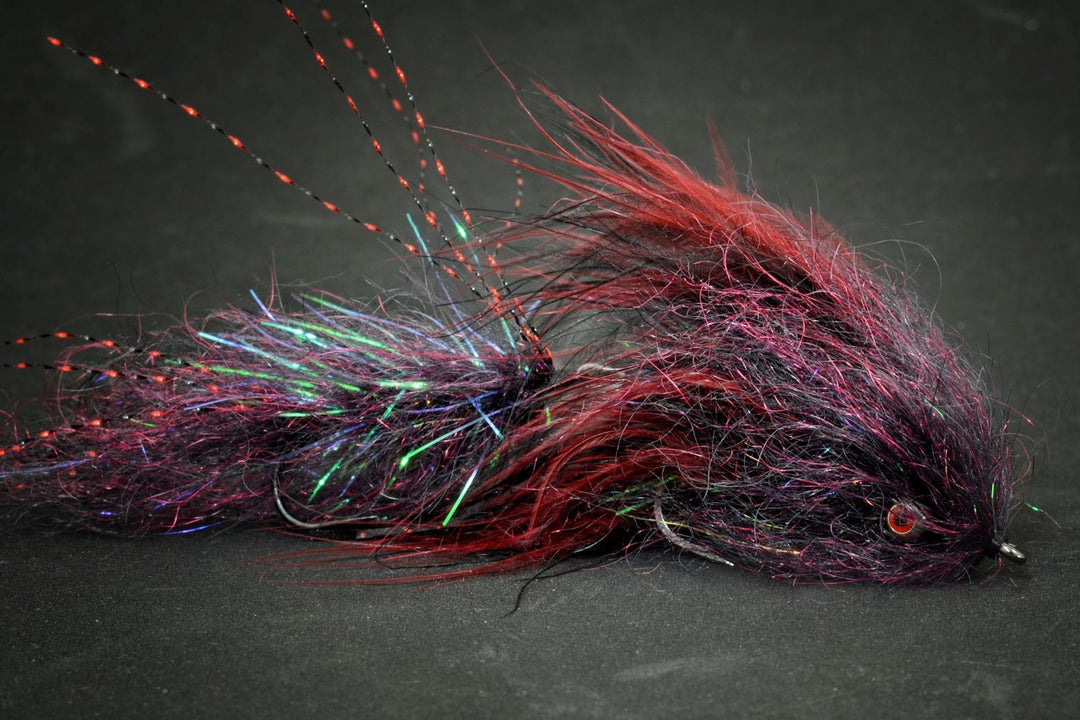
Rusty Trombone — larger streamer/cray hybrid for searching runs.
Winter Emergers & Soft-hackle options (cold-water windows)
Tungsten Split Case — PMD — emerger/nymph hybrid with instant depth.
Split Case — PMD — a classical emerger profile for slow, subtle takes.
Bead Head Barr Emerger — PMD — useful when fish key emergers in cold runs.
Soft Hackle Pheasant Tail — Jig (Barbless) — soft-hackle movement that triggers lethargic fish.
Tactics & Quick Tips
Depth first: add short tungsten droppers, heavier beadheads, or use a 1–2 ft longer leader to keep flies in the strike zone.
Nymph rigs: indicator rigs or tight-line/euro setups — 9–12' leaders with small tippet; slow dead-drift through seams and tail-outs.
Streamer work: slow strips with pauses near structure and the bottom — entice lethargic fish with long, slow presentations and occasional twitch.
Where to present: target current breaks, inside seams, downstream of large rocks, and the heads of deep pools. For tidal sections, work edges of the main channel on slack tide when fish move into shallows.
When to fish: warmest part of the day on milder spells; walleye and catfish often take better at dusk into night. Safety first — icy mornings and fast tidal changes can be hazardous.
Nymph rigs: indicator rigs or tight-line/euro setups — 9–12' leaders with small tippet; slow dead-drift through seams and tail-outs.
Streamer work: slow strips with pauses near structure and the bottom — entice lethargic fish with long, slow presentations and occasional twitch.
Where to present: target current breaks, inside seams, downstream of large rocks, and the heads of deep pools. For tidal sections, work edges of the main channel on slack tide when fish move into shallows.
When to fish: warmest part of the day on milder spells; walleye and catfish often take better at dusk into night. Safety first — icy mornings and fast tidal changes can be hazardous.
Local Notes — Regulations & Access
- Check state regs: tidal striped bass rules change seasonally. Maryland closed the tidal season at year-end last year — verify MD/VA rules before you fish the tidal Potomac.
- Boat ramps and public put-ins along the Potomac are operational but can freeze or be slippery in January; park thoughtfully and respect landowners.
- Potomac Valley Fly Fishers and regional fly shop reports are good real-time sources for riffle-specific intel; consult them before heading out.
Tackle & Leader Suggestions
Rods
5–7 wt for streamers/large nymphs; 3–5 wt or a dedicated euro rod for tight-line nymphing.
Lines
Sinking-tip or full-sink for big streamers; floating line + long leader for indicator nymphing.
Leaders & Tippet
9–12' leaders for euro/nymphing, 6–9' tapered for streamers; tippet 4–8 lb depending on stream and fly.
Terminal tackle
Small tungsten beads, jig hooks, and a handful of split shot; winter-style strike indicators for slow presentation.
Quick Winter Checklist
- Thermal layers, waterproof outer shell, insulated boots & gaiters
- Full-coverage waders (insulated if you have them)
- Extra leaders, tungsten jigs, a few heavy streamers, and multiple perdigon/nymph options
- VHF/phone, life jacket for boats, and hand warmers