Rogue River Fly Fishing Report - January 1/4/2026
ROGUE RIVER FLY FISHING REPORT
Southern Oregon — Rogue River (Upper, Middle & Lower Sections)
Current River Conditions
Flows: Rising from recent rain; watch USGS gauges for real-time changes.
Clarity: Lower Rogue—off-color/muddy in seams; Middle & upper stretches—pockets of clearer water and stained edges.
Note: Debris lines and woody material present; pick safe wading lines.
Typical early January range: low-to-mid 40s °F (roughly 4–7°C).
Cold water slows insect activity but concentrates migrating steelhead.
Recent: rainy front moved through; windy at times.
Short-term: chance of additional showers, dipping temps overnight. Monitor local forecasts before heading out.
Most public access points are open but may be muddy or flooded.
Boat ramps: variable—check local outfitters and landing reports. Always watch for high, fast water and floating debris.
Regulations & Permits
What’s Biting — Target Species
| Species | Where to Find Them | Technique |
|---|---|---|
| Winter Steelhead | Lower & middle mainstem seams, pool tails, and near tributary mouths | Swinging streamers/steelhead intruders; indicator nymphing in quieter tails |
| Hatchery Trout & Coho (pockets) | Upper Rogue and hatchery-influenced stretches | Small nymphs & bead patterns; short, precise presentations |
| Resident Trout | Side channels, pocket water, clearer upper reaches | Euro-style nymphs, soft hackles, and small streamers on bright sections |
Hatch & Insect Activity (January)
| Insect | Activity | Prime Time |
|---|---|---|
| Midges | Low-to-moderate (most consistent winter food) | Throughout the day in protected pockets |
| Baetis / PMD | Occasional emergences on warmer, calm afternoons | Midday when temps briefly rise |
| Stoneflies / Salmonflies | Not expected (seasonal later in spring) | — |
Recommended Flies (linked to patterns)
Steelhead — Streamers & Swing Flies
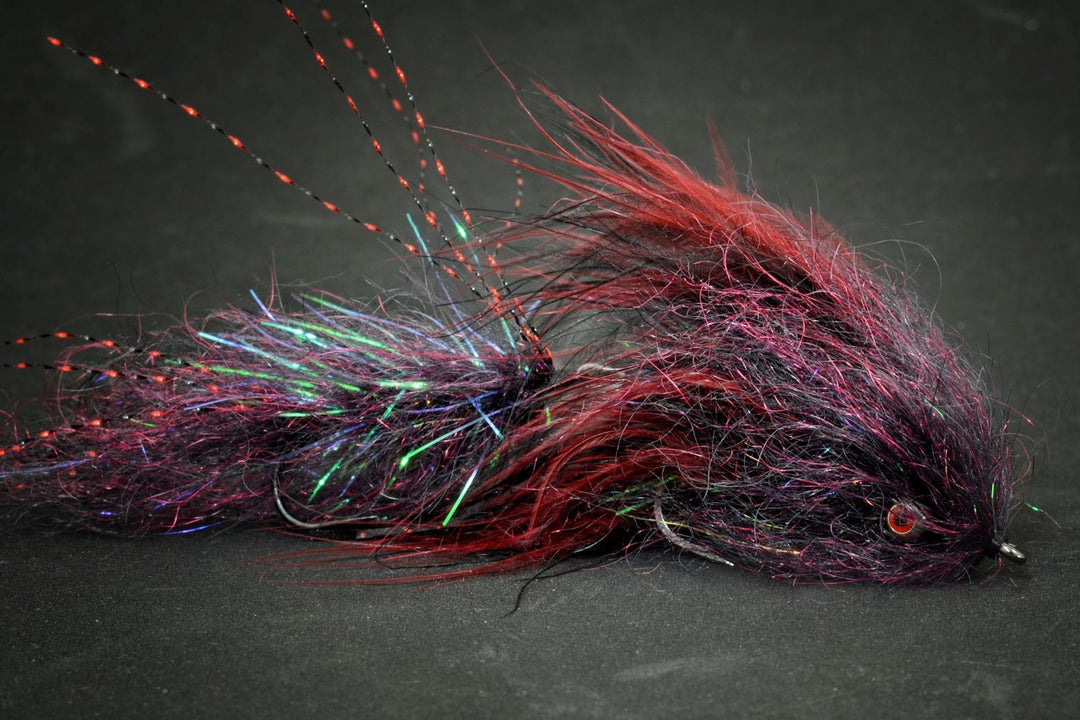
Choose robust, aggressive-profile streamers to swing through seams and tails. Start with darker, contrasty patterns on stained water; switch to natural tones if water clears.
- Coffey's CH Sparkle Minnow Sculpin — classic sculpin profile for big river takes.
- Sculpzilla - Olive — articulated, excellent for heavy current and big steelhead.
- Near Nuff Sculpin - Olive — compact, low-drag sculpin imitation.
- Galloup's Slick Willy - Whitefish — baitfish silhouette that triggers aggressive strikes.
Nymphs, Jigs & Euro Nymphing
Winter steelhead and opportunistic trout will key on meatier nymphs and jigged beads presented in and below seams. Use tungsten jigs or heavy beadheads to reach fish-holding depths quickly.
- Egan's Thread Frenchie Jig - Olive — a go-to tungsten jig with great hooking characteristics.
- Tungsten Dart - Red — compact, darting nymph that fishes well under indicators or Euro rigs.
- Tasmanian Devil Hare's Ear — a large, fuzzy nymph that suspends attractively.
- Olsen's Straggle Stone - Brown (barbless) — excellent stonefly/salmonfly profile for late winter/early spring transitions and heavy current.
Eggs & Attractor Patterns
Egg patterns and soft attractors will produce takes in stained water and near gravel bars where fish stage. Use bright or natural egg colors depending on visibility.
- EZ Egg - Baby Pink (barbless) — classic attractor for steelhead and trout.
- EZ Egg - Fl. Sunburst (barbless) — high-vis option for dirty water.
- Twister Egg - Fl. Sunburst (barbless) — weighted egg that rides low and bright.
- Slush Egg - Apricot — soft, natural-looking egg imitation that fishes well on droppers and indicator rigs.
Smaller Nymphs & Midges (Indicators / Dropper Rigs)
When fish key on midges and small mayfly nymphs in clearer pockets, down-size and dead-drift. Carry a selection of tungsten zebra midges and small perdigons.
- Tungsten Split Case Nymph - PMD — compact profile for subtle takes.
- Perdigon Nymph - Pearl — tight, heavy perdigon for indicator and Euro setups.
- Juju Baetis Tungsten — great small mayfly nymph imitation in clear pockets.
- Black Zebra Midge (TBH) — winter midge pattern for ultra-finescale presentations.
Tactics & Strategy (Early January)
- Swing method: long, relatively heavy sink-tip or full-sink lines when water is higher; short, slower swings when stained.
- Indicator nymphing: strong approach for pools and tails—size up if fish ignore tiny flies; add an attractor/bead above a smaller nymph.
- Streamers: slow, honest strips through current breaks and rock edges; vary strip cadence—short rapid strips then pause often produces reaction strikes.
- Safety: avoid wading in fast, high flows; wear a wading staff and PFD when boating.
Where to Watch for Current Info
- USGS Rogue River gauges (check Grants Pass, Agness, and other local stations).
- ODFW Southwest Zone fishing updates and recreation reports.
- Local guide shops and Rogue Valley Anglers (current conditions & ramp reports).
Quick Gear Checklist
8–10 wt for swing/streamer setups; 6–7 wt for nymphing where trout/coho are present.
Sink-tip, full-sink and intermediate tips for swinging; floating with heavy tips for streamer work.
Tungsten jigged nymphs, heavy bead eggs, 6–12 lb fluorocarbon leaders for steelhead, 10–20 lb for landing big fish.
Barbless hooks where required.
Wading staff, ice grips if cold, polarized sunglasses, rain layers, river map, permit/license.