Montana ·
Smith River Fly Fishing Report - March 3/1/2026
SMITH RIVER FLY FISHING REPORT
Focused: Cold‑water strategies (midge/BWO, deep nymphing, slow streamers)
Report Date: March 1, 2026 | Next Update: March 8, 2026
Current River Snapshot
Smith River is in early spring profile — cold water and low to moderate insect activity. Best results right now come from subsurface tactics: deep, tungsten nymphs, tight Euro rigs, and slow, deliberate streamer presentations. Expect sporadic short-lived surface activity from midges and early Baetis (BWO) on calm afternoons.
Flows & Clarity
Flow: Typical winter/spring base flows — generally cold and clear to off‑color in runouts.
Clarity: Good in typical runs; pockets and flood debris can be stained.
Flow: Typical winter/spring base flows — generally cold and clear to off‑color in runouts.
Clarity: Good in typical runs; pockets and flood debris can be stained.
Water Temperature
Current: generally in the mid‑30s to low‑40s °F (1–6°C)
Note: trout metabolism is slow — fish deep and present slowly.
Current: generally in the mid‑30s to low‑40s °F (1–6°C)
Note: trout metabolism is slow — fish deep and present slowly.
Weather & Wind
Forecast: Cool, variable sun and clouds; low daytime temps; light winds.
Tip: Calm, sunny spells bring the best mid‑day midge/BWO windows.
Forecast: Cool, variable sun and clouds; low daytime temps; light winds.
Tip: Calm, sunny spells bring the best mid‑day midge/BWO windows.
Access & Safety
Many spring roads and launch sites can still be wet or muddy — check local landowner/BLM updates. Cold water safety: use a PFD when wading/boat fishing and bring layers.
Hatch & Insect Activity (early March)
| Insect | Typical Size | Activity | Prime Time |
|---|---|---|---|
| Midges (Chironomids) | #18–24 | Moderate — steady subsurface activity; emergences in calm pockets | Throughout day; best in low wind |
| BWO / Baetis (early) | #18–22 | Light — short mid‑day takes on calm water | Late morning to mid‑afternoon on mild days |
| Caddis (low) | #16–20 | Low — occasional emergers; mostly subsurface pupa | Late afternoon/evening pockets |
| Streamers / Baitfish patterns | #6–2 (small/medium) | Effective — holding trout respond to slow retrieves | All day; best in deeper runs/structure |
Recommended Flies (matched to recent fly patterns)
Below are winter/early‑spring appropriate patterns from the attached fly catalog. Links go directly to the product page for quick ordering. Prioritized by proven winter/Euro/nymph/streamer effectiveness.
Nymphs / Jigs (deep nymphing & Euro)
- Egan's Thread Frenchie Jig - Olive (Rank 4) — excellent as a point fly on jig rigs and winter midge/baetis presentations.
- Pheasant Tail Tungsten (Rank 16) — classic, versatile; fish deep on an indicator or Euro rig.
- Egan's Frenchie (Rank 12) — tungsten bead nymph with a small profile for slow trout feeding.
- Roza's World Spain Perdigon - Barbless (Rank 13) — tight, dense Perdigon for low‑visibility strikes.
- Tungsten Split Case Nymph - PMD (Rank 17) — for early mayfly nymph activity and quick‑sink presentations.
Midges & Zebra / Jig Midges (winter midge tactics)
- Black Zebra Midge (TBH) (Rank 48) — winter midge favorite; use with ultra‑fine tippet and short leader.
- Black Mirage Zebra Midge (Rank 85) — great for indicator nymphing and short drifts.
- Redneck Midge (Rank 88) — simple, effective when fish are keyed to small midges.
- Top Secret Midge (Rank 109) — reliable small midge pattern for slow water seams.
BWO / Baetis & Small Dry/Emerger Options
- Parachute - Blue Wing Olive (Rank 31) — use sparingly on calm days for small surface activity.
- Egan's Silver Bullet - Baetis (Rank 36) — small emerger/dry useful on short BWO windows.
- Barr's Flashback Emerger - BWO (Rank 72) — good emerger presentation for picky eats.
- Antonio's Adult BWO (Rank 102) — small parachute for gentle rises.
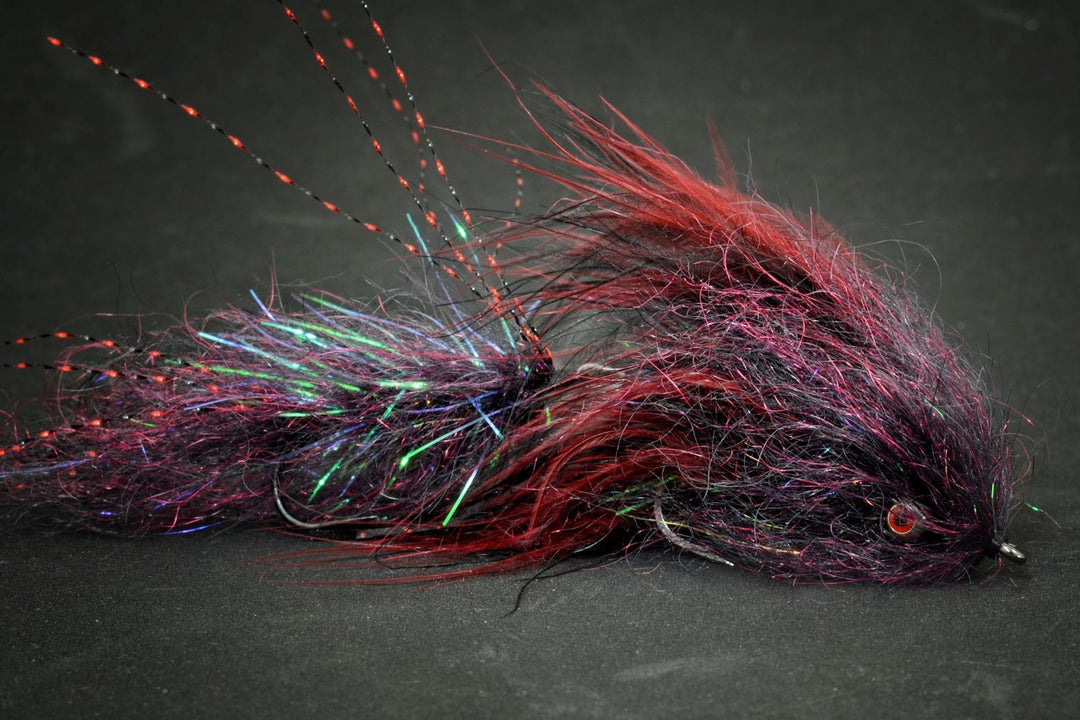
Streamers & Sculpin/Big‑Profile Flies (slow stripping)
- Egan's Poacher - Olive (Rank 1) — slow strip, short pauses through deep runs/holes.
- Egan's Poacher - Black (Rank 2) — darker profile for low‑light or stained water.
- Coffey's CH Sparkle Minnow Sculpin (Rank 7) — sculpin imitation for bottom‑oriented trout.
- Sculpzilla - Olive (Rank 65) — articulated or non‑articulated for slow sweep retrieves.
Soft Hackles / Sowbugs / Small Jigged Patterns (indicator & soft‑hackle rigs)
- CDC Soft Hackle Tailwater Sowbug Jig - Rainbow (Rank 164) — great as droppers or on indicator rigs.
- Tungsten Tailwater Sowbug - Rainbow (Rank 25) — small jigged sowbug for deep seams.
- Soft Hackle Pheasant Tail Jig - Barbless (Rank 63) — subtle soft‑hackle action around emergences.
- Pheasant Tail Nat Jig B/L (Pheasant Tail variations) (various ranks) — dependable beaded jig options.
Tactics — Cold‑Water Focus
Key approach: fish slow, deep, and precise. In March trout feed low and react to subtle, low‑energy presentations.
Deep Nymphing (primary)
- Set up: short, stout leader with 6–10 ft of tippet taper to a tungsten jig or beadhead nymph. Use a 0.9–1.5 m fluorocarbon point for stealth.
- Rigs: Euro (single‑point) rigs or indicator rigs with two nymphs — point fly heavy (tungsten) and an attractor or smaller midge behind/above.
- Tactics: target the tailouts, seams, and inside corners. Maintain contact and feel for subtle takes; hold drift and let the rig fish the bottom.
- Tippets: 4–7X depending on flies and clarity; go finer when midges/BWO are the game.
Midge / BWO Strategy (picky fish)
- When you see sipping or tiny rises, switch to small midges or BWO emergers on 5–8X tippet.
- Use short leaders, minimal drag, and dead‑drift presentations. A CDC emerger or parachute BWO in sizes #18–22 will tempt selective fish.
- If fish refuse a dry, try the same pattern as a drogue‑free emerger under an indicator or on a short dropper.
Slow Streamer Work (active predators)
- When water temps inch up and fish hold in deep runs, try slow strip retrieves: short strips, long pauses, slow hand‑twitched strips.
- Focus on edges of current seams, pocket water and behind big structure. Heavy or articulated sculpin streamers fished close to the bottom produce follows and trigger strikes.
- Gear: 6–8 wt for larger streamers, matching leader butt to fly weight; long, supple leaders for subtle action.
Shot, Indicators & Depth Control
- Use micro‑split shot or heavy beads to get flies to the fish quickly on indicator rigs. Keep the bottom bounce controlled.
- Adjust depth by observing lead time and bottom contact; fish will often take when the nymph sits two‑three inches above the bottom.
Quick Rig / Tippet Cheat Sheet
Euro / Deep Nymph
9' mono leader tip + 0.9–1.5 m fluorocarbon point, heavy tungsten jig (size 14–18), 2–6X tippet.
Indicator Nymph
12–14' leader, slow‑sinking bead nymphs, indicator 6–12' above fly, 4–7X tippet.
Streamer
6–8 wt line, 7–10' sinking or sink‑tip as needed, 0X–2X leader butt to 12–16 lb shock tippet on big flies.
Dry / Emerger
Short tapered leader, 5–8X tippet, tiny parachutes and emergers in calm water on sunny windows.
Final Notes
- March is a cold‑water month: prioritize subsurface tactics.
- Watch for short calm windows for BWO / midge activity and be ready to switch to tiny emerger/dry patterns.
- Streamer fishing early and late in the day on deeper runs often picks up bigger, opportunistic fish.
- Respect landowner and BLM regulations for Smith River access; conditions and closures can change quickly.
- Watch for short calm windows for BWO / midge activity and be ready to switch to tiny emerger/dry patterns.
- Streamer fishing early and late in the day on deeper runs often picks up bigger, opportunistic fish.
- Respect landowner and BLM regulations for Smith River access; conditions and closures can change quickly.