Utah ·
Weber River Fly Fishing Report - April 4/5/2026
WEBER RIVER FLY FISHING REPORT
Northern Utah — Cold-water spring tactics
Report Date: April 5, 2026 | Next Update: April 12, 2026
Current River Conditions
Spring runoff is the story: flows are elevated and cold. Expect pushy water in the mid and upper canyon sections, with clearer, faster seams below reservoirs. Fish are keyed to deep seams, tails of runs, and mid-channel shelves — prioritize nymph rigs and slow streamer work.
Flows & Clarity
Flow: Elevated — spring runoff rising (variable by section)
Clarity: Off-color to lightly stained in many upper stretches; clearer near lower reaches and tailwaters
Note: Choose deeper seams and pocket water where fish hold out of the main push
Flow: Elevated — spring runoff rising (variable by section)
Clarity: Off-color to lightly stained in many upper stretches; clearer near lower reaches and tailwaters
Note: Choose deeper seams and pocket water where fish hold out of the main push
Water Temperature
Current: ~38–45°F (3–7°C)
Trend: Slowly warming but still cold — trout are active but reluctant to chase far
Current: ~38–45°F (3–7°C)
Trend: Slowly warming but still cold — trout are active but reluctant to chase far
Weather
Typical spring variability — cool mornings, warming afternoons, possible afternoon breeze. Dress in layers and expect quick changes.
Typical spring variability — cool mornings, warming afternoons, possible afternoon breeze. Dress in layers and expect quick changes.
Access & Safety
Low-elevation access points open; higher roads may still have snow/ice. Use caution on wet banks and watch for high, fast flows. Waders with studs recommended.
Low-elevation access points open; higher roads may still have snow/ice. Use caution on wet banks and watch for high, fast flows. Waders with studs recommended.
Hatch Chart & Insect Activity (Early April)
| Insect | Size / Notes | Activity Level | Prime Time |
|---|---|---|---|
| Midges (all stages) | Tiny (#18–26) — larva, pupa & emergers dominate | High ⭐⭐⭐⭐ | All day (early mornings and overcast afternoons especially productive) |
| Blue‑Winged Olives (BWO / Baetis) | #18–22 — emergers and small duns | Moderate ⭐⭐⭐ | Late morning to early afternoon; look for soft rises and film seams |
| PMD activity (pale mayflies) | #14–18 — light emergences | Light ⭐⭐ | Midday in warmer pockets |
| Caddis (pupa/larvae) | #16–20 — subsurface activity | Light ⭐⭐ | Evening and under cover |
Recommended Flies (early April — cold water focus)
Nymphs / Euro and Indicator Rigs (deep nymphing first choice)
- Egan's Poacher - Olive — versatile anchor / euro nymphing fly (Rank 1)
- Egan's Poacher - Black — darker variation for lower-light and stained water (Rank 2)
- Egan's Thread Frenchie Jig - Olive — jigged nymph for seams and pockets (Rank 4)
- Tungsten Dart - Red — slim, fast-sinking dart for deep runs and indicator rigs (Rank 5)
- Pheasant Tail Tungsten — dependable baetis/PMD nymph profile for tight presentations (Rank 16)
- Roza's World Spain Perdigon (barbless) — Perdigon-style point fly for clear, fast water (Rank 13)
Midges (critical in early April — fish small and deep)
- Black Zebra Midge (TBH) — winter/cold-water midge go-to (Rank 48)
- Black Mirage Zebra Midge — tungsten versions sink fast into the film/near-bottom (Rank 85)
- Top Secret Midge — small, realistic midge for indicator and tight-line nymphing (Rank 109)
- Jujubee Midge Flash - Zebra — subtle flash for picky fish (Rank 224)
Streamers & Large Subsurface Profiles (slow stripping, tight to structure)
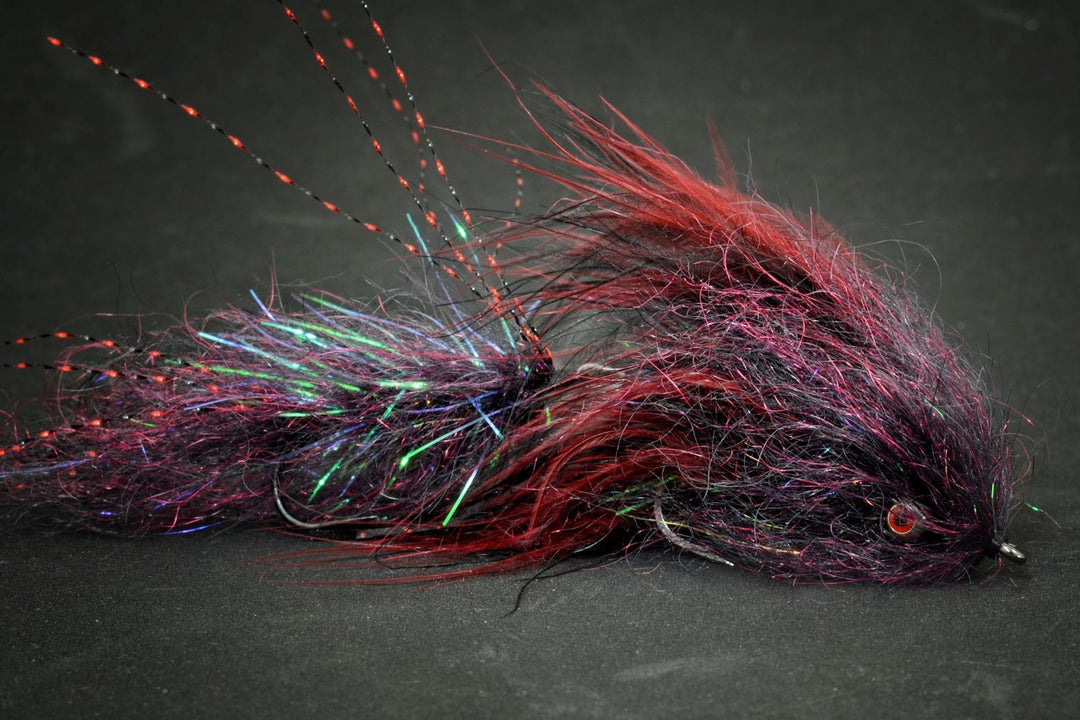
- Coffey's CH Sparkle Minnow Sculpin — sculpin/pit-bait profile for shallow-deep transitions (Rank 7)
- Sculpzilla - Olive — big, slow-moving sculpin imitation for heavy water and structure (Rank 65)
- Sculpzilla - Black — tannic/stained-water option (Rank 97)
- Galloup's Slick Willy - Whitefish — articulated baitfish streamer for deep pools and edges (Rank 108)
- Balanced Leech - Black — balanced leech for slow-suspended presentations (Rank 58)
BWO / PMD Emergers & Small Dries (target rising/hesitant trout)
- Parachute — Blue Wing Olive — parachute style for sparse surface tends (Rank 31)
- Stealth Link Mercer — BWO — compact, effective BWO dry/emergent pattern (Rank 219)
- Antonio's Adult BWO — realistic adult for brief surface windows (Rank 102)
- Stealth Link Mercer — PMD — PMD emerger/dun option when water warms (Rank 32)
Tactics & Tips — Cold‑Water Strategy (April)
- Deep nymphing is the priority in early April. Fish long leaders, small soft indicators, or tight-line/euro set-ups. When flows are high, choose tungsten jig/nymphs and slim perdigons to get down quickly.
- Indicator rigs: long leaders (10–14') with a short dropper to a smaller midge/baetis pattern. Use 6–8 ft tippet on the point, lighter on droppers. When clarity is low, upsize to a slightly larger profile but keep subtle natural color.
- Euro / tight-line: lean on slim perdigon and poacher-style flies fished close to the bottom in seams and tails of runs. Polish your mending to keep a natural drift under higher current.
- Streamer approach: slow, deliberate strips with pauses. Target deep heads of pools, undercut banks, and boulder tails. When fish are lethargic, short slow strips with occasional dead‑stops are far more effective than fast, aggressive retrieves.
- Midge focus: when midge activity is present, run small droppers (zebra midges, jujubee) below a larger nymph or beadhead as an anchor. Fish mid-depth columns—not just surface—since midges hatch over a wide vertical range.
- BWO windows: if you see sporadic dimple rises or film-feeding, switch to BWO emerger/dun patterns and shorten your leader; stealth and small flies win here.
- Leader / tippet: 7–9 ft 4X butt taper with 5–9 ft 5X–6X tippet for dries/emerger work; for euro/indicator nymphing, use 0.12–0.18 mm (4X–6X equiv) fluorocarbon on the business end. Increase strength when stripping bigger streamers.
- Indicator rigs: long leaders (10–14') with a short dropper to a smaller midge/baetis pattern. Use 6–8 ft tippet on the point, lighter on droppers. When clarity is low, upsize to a slightly larger profile but keep subtle natural color.
- Euro / tight-line: lean on slim perdigon and poacher-style flies fished close to the bottom in seams and tails of runs. Polish your mending to keep a natural drift under higher current.
- Streamer approach: slow, deliberate strips with pauses. Target deep heads of pools, undercut banks, and boulder tails. When fish are lethargic, short slow strips with occasional dead‑stops are far more effective than fast, aggressive retrieves.
- Midge focus: when midge activity is present, run small droppers (zebra midges, jujubee) below a larger nymph or beadhead as an anchor. Fish mid-depth columns—not just surface—since midges hatch over a wide vertical range.
- BWO windows: if you see sporadic dimple rises or film-feeding, switch to BWO emerger/dun patterns and shorten your leader; stealth and small flies win here.
- Leader / tippet: 7–9 ft 4X butt taper with 5–9 ft 5X–6X tippet for dries/emerger work; for euro/indicator nymphing, use 0.12–0.18 mm (4X–6X equiv) fluorocarbon on the business end. Increase strength when stripping bigger streamers.
Quick Rig Recipes
- Indicator Nymph Rig (high, cold flows): 9–10' fluorocarbon leader to indicator → 3–4' drop to tungsten dart or Frenchie jig → 12–18" below to midge/zebra as trailer.
- Tight-Line Euro Setup (clear sections): Short leader on furled line or mono, point Perdigon (Roza's / Egan Warrior) with a slim dropper; small midge second fly if water column requires.
- Streamer Rig (slow retrieve): 6–7 wt rod, 20–25 lb fluorocarbon leader, 2–4' bite leader to sculpin/baitfish streamer — slow strip, hold in current seams, pause 2–4 seconds.
Local Notes & Conservation
Water is cold and fish are more vulnerable in early spring. Use barbless hooks or flatten barbs, keep handling to a minimum, and avoid prolonged fights in warm mid‑day sun. Respect closures and private property.